
A new tool for grid capacity. Deploy in months.
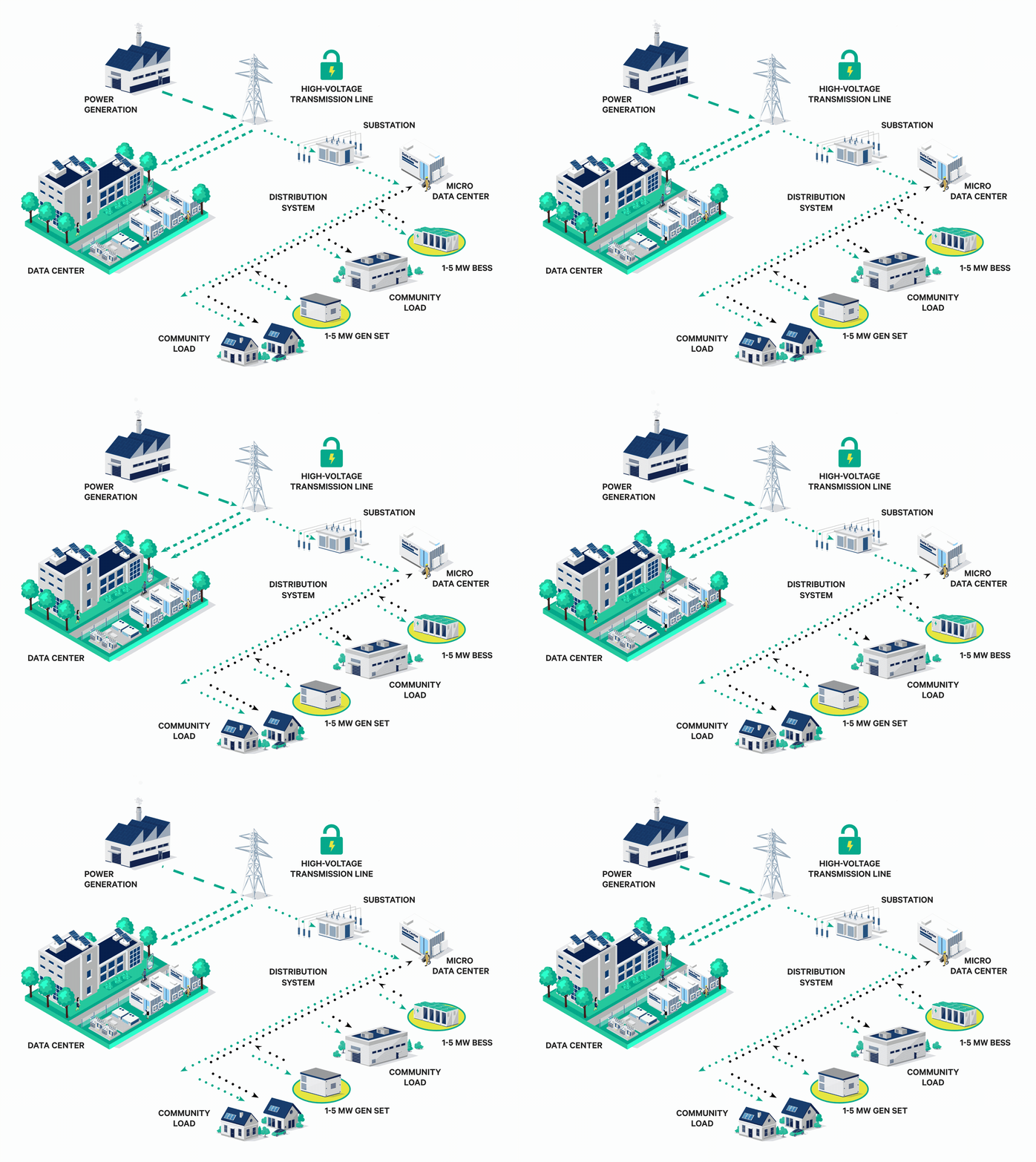
Distributed Capacity Procurement (DCP) turns your distribution system into a platform for capacity growth. Utility-owned, 1–5 MW, front-of-the-meter batteries and gensets deploy exactly where and when the grid needs it most — unlocking capacity and putting downward pressure on rates.
Utility-grade. Accredited.Distributed capacity.
This isn't demand response. It isn't behind-the-meter. It's front-of-the-meter battery storage and gensets — utility-owned assets, integrated with DERMS, ADMS, and SCADA, dispatched from the control room, and accredited as capacity on the utility's resource plan. The kind of capacity that counts — exactly where and when the grid needs it most.
Unlock Capacity.
Grow your grid.
DCP adds physical supply-side capacity where the grid needs it most — utility-owned, utility-dispatched, and accredited on the resource plan. Front-of-the-meter batteries and gensets deploy at targeted locations across your service territory, integrated into utility control systems from day one.
Improves utilization. Benefits every ratepayer.
DCP adds capacity where the grid needs it most, improving system utilization and putting downward pressure on rates. Independent Brattle Group analysis found a 10% improvement in US system utilization reduces rates by 3.4%, while utility earnings grow.
A new tool for the planning portfolio. Proven technology.
Utility-scale resources handle bulk capacity. DCP fills the distributed gap — front-of-the-meter batteries and gensets deployed as permanent infrastructure, with the same confidence as a substation or transmission line. The first DCP creates the template. Each one after deepens the capability.
Built for commissioner confidence.
More than 80% of every dollar is competitively bid to local and regional vendor and contractor ecosystem. Host sites — local businesses, houses of worship, and industrial facilities — earn reliable monthly income while the program puts downward pressure on rates for all ratepayers. Deployment runs through the IRP. That's the kind of program utilities bring to their commissioners with confidence.
The right tool for your grid challenge.
Load Growth & Resource Adequacy
Scale as demand materializes.
Tranches that accelerate your capacity position without overbuilding or forecast risk. DCP deploys in months, not years — letting you add capacity in step with load growth and refine the program as demand becomes clearer.
Large Load & Data Center Serving
Turn large load into a grid asset.
Through DCP, large-load customers fund deployment in your territory, Sparkfund deploys, and the grid gets stronger. The data center arrives as a source of investment, not just load. Co-benefits accrue to all ratepayers.
See how DCP works for data centersWildfire Mitigation & Local Resilience
Dispatchable backup through PSPS events.
Front-of-the-meter batteries and gensets near critical loads provide dispatchable backup through Public Safety Power Shutoff events, from peak smoothing to multi-day de-energizations.
Approved. Funded. Deploying.
On April 2, 2026, the Minnesota Public Utilities Commission voted unanimously to approve Xcel Energy's Capacity*Connect — the first-in-the-nation distributed capacity procurement program. The program authorizes up to 200 megawatts of front-of-the-meter battery storage at commercial, industrial, and nonprofit sites across Minnesota by 2028, deployed in collaboration with Sparkfund.
The program emerged from Xcel's multi-year Integrated Resource Plan and earned a unanimous commission vote, with independent third-party evaluation requirements built in from the start.
In February 2026, Google committed $50 million toward Capacity*Connect to power a new data center in Pine Island, Minnesota — five weeks before the Minnesota PUC approved the program. The commitment was a structured investment, not a press release pledge. Google funds distributed battery deployment and receives matched capacity credits when the assets achieve MISO accreditation.
"We're focused on supporting economic growth and the needs of our communities by building out and modernizing our energy grid."
— Ryan Long, President, Xcel Energy-Minnesota, North Dakota and South Dakota
Regulatory Framework
The Capacity*Connect order includes independent third-party program evaluation, a 50 MW milestone assessment, DER benefit reporting by November 2027, underserved communities siting requirements, and small and diverse business owner provisions in contracting. The program is a starting line, not a finish line. The measurement framework is built in.

Ready to add DCP to your planning portfolio?
Talk to our team about your resource adequacy position, load growth timeline, and where DCP fits in your territory.
Talk to our team